
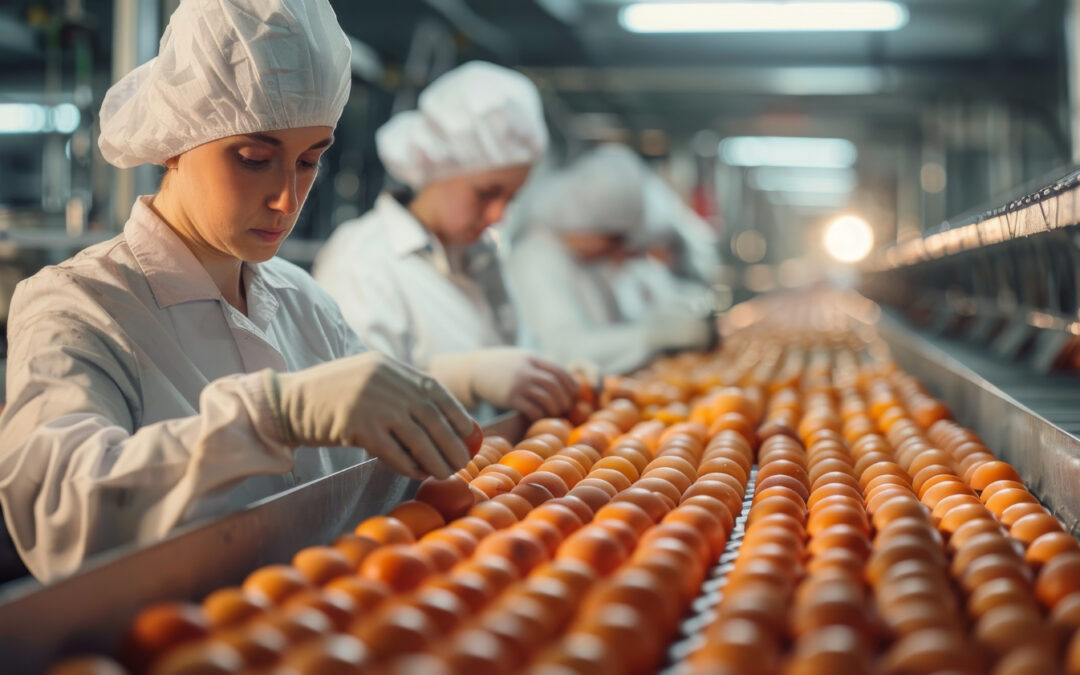
Rising energy prices have made energy efficiency a top priority for UK food and drink manufacturing. Initiatives to improve operational efficiency can deliver significant financial savings and strengthen resilience to rising energy costs. The UK food and drink manufacturing sector is the UK’s largest manufacturing industry, contributing £28 billion annually to the economy, and accounts for approximately a fifth of total UK manufacturing energy use. Energy represents a large operating cost for many companies, and reducing energy use is a key focus of businesses seeking to improve profitability.
Energy efficiency involves reducing the amount of energy required to produce given products, services, or results. Activities and processes within UK food and drink manufacturing that can be considered for energy efficiency improvements include upgrading equipment and processes, lean manufacturing and waste reduction, high-efficiency motors and drives, heat recovery and thermal insulation, refrigeration optimisation, smart energy management, and sustainable packaging and logistics. Incorporating energy efficiency into business-as-usual operations is essential to maintaining competitiveness, supporting long-term business sustainability in a time of rapid change, and responding effectively to the energy intensity of products and corporate social responsibility.
2. Energy Challenges in the British Food and Beverage Sector
Within the British food and beverage sector, levels of energy intensity vary widely by product group. For example, beer and soft drinks are the most energy-intensive subsectors, with energy costs accounting for around 10% of turnover, and much of it consumed during peak periods. By contrast, confectionery businesses often have energy efficiency considerably below the best-in-class level, and for the sector as a whole, energy costs amount to less than 2% of turnover. A large share of food and drink manufacturers have not invested in a systematic manner towards more energy-efficient facilities and processes, facing multiple market and supply-side pressures. Nevertheless, these investable areas remain.
Reducing the capital costs of energy-saving investments would help overcome many of these barriers. Further, energy efficiency improvement can also reduce other costs when implemented in a lean framework, ensuring that energy is not seen in isolation and lending itself naturally to value-stream mapping techniques. In addition to financial payback, installed capital also requires very careful scrutiny, since it has been shown that capital expenditure is actually an immediate precursor to labour productivity improvements.
3. Industrial Efficiency: Upgrading Equipment and Processes
Kitchen equipment and production lines represent one of the food sector’s biggest energy-draining culprits. Industry sectors obviously differ, but energy-intensive processes generally cover cooking, drying, brewing, distillation, and evaporation. And the growing emphasis on energy efficiency together with escalating prices have certainly made their mark.
The benefits of upgrading production lines are not hard to spot. Besides reducing energy costs, modernisation can provide faster throughput, improve quality, cut waste, enhance safety, mitigate maintenance problems, and ensure compliance with standards and regulations. Furthermore, the cost of equipment and, in some cases, installation has plummeted. Paybacks are once again being seen within the 18-month period or less that serves as a general benchmark in the food industry. The challenge is deciding which systems need replacement, the cost and timing of replacements, the availability of capital—especially for smaller manufacturers—and the management of lines during changeover.
3.1. Lean Manufacturing and Waste Reduction
Waste is commonly viewed as the excessive use of materials or services in making a product. However, waste in food and drink manufacturing is actually a loss of energy invested in resources throughout the manufacturing chain. Lean manufacturing is a method of identifying and eliminating Waste, thereby increasing profits. Value-stream mapping techniques can be used to identify material bottlenecks, and targets can be set for reductions in scrap, packaging waste, machine downtime, and other key performance indicators.
The food and drink manufacturing industry is under increasing pressure to reduce waste and improve sustainability. Therefore, companies should put waste at the heart of their operations. In a traditionally low-margin sector, Waste is not simply an environmental issue; it is a financial necessity. Waste needs to be clearly defined and measurable, and all functions, from supplier selection to end-of-life management, need to be aligned. A focus on material waste inevitably has a secondary impact on energy use as well, since resources are energy-intensive.
Value-stream mapping techniques can be employed to identify bottlenecks in the materials flow and set themselves KPIs. These might include targets such as packaging miles, machine downtime, scrap, or product returns.
3.2. High-Efficiency Motors and Drives
Industry efficiency upgrades unlock energy cost savings, and improved maintenance practices sustain them. Motors account for an estimated 60% of the food and beverage sector’s electricity use, and heat emissions from inefficiency in these machines can be a significant source of lost energy. Ensuring that existing motors operate efficiently and installing new motors or drives that comply with the highest efficiency international standards (for example, IE3 or IE4) can offer rapid payback and recovery. A proven approach for medium and large motors is to labour each motor’s size and replace inefficient units identified through a thermal picture survey. Variable-speed drives (VSDs) should be introduced where feasible, sized for flexibility (avoiding the scrappage of small engines), and appropriate payback periods confirmed.
A very broad range of potential energy saving exists, and every replacement of an existing motor should be considered. The “superefficient motor” increase on lower-specified models (usually 15%-20%) contact achieved as labour and work simulation evaluations. Sophisticated installations currently point to VSD payback periods of 12 months or less, and any accurate project should explore the implications of these reachable deadlines. In food and beverage heat systems, VSD payback typically drops below one year. Replacing high temperature motors having IE2 is frequently measured to deliver energy savings of 15-20% over normal IEC motors, with only marginal increase in purchase costs. Testing with vsds fitted should repeatedly produce energy savings of 50% during part-loading phases. Thus consistent amounts of saved energy (as compared with those HP motors operated alone) can be resultant from VSDs even when the motors fitted are of ordinary IEC design.
3.3. Heat Recovery and Thermal Insulation
The process of energy recovery involves reclaiming waste heat from the production process which usually would be lost into the environment. Any hot water streams, processed exhaust gas heat or hot surfaces losses can be reclaimed and either reused by processes or redirected to heating requirements elsewhere in the factory. The capital cost for such systems are often relatively low and payback can be realistic with good levels of diligence. Sadly, manufacturers are still ignoring these routes and yet in many cases it can be the lowest investment or lowest risk route where success can be confidently expected.
Heat Recovery is a particular type of energy efficiency technology that, although not exclusively applicable to food and drink users, nevertheless has some advantages in this sector. In the food and drink sector, many processes require some form of heating and so ultimately heat recovery does provide a means of reducing energy consumption as well as costs. More broadly, there are many different types of heat recovery equipment, broadly categorised as mechanical devices (heat pumps, vapour compression plants) or passive systems (thermal storage, lagging, ventilation systems).
3.4. Refrigeration Optimisation
Cutting the energy required for refrigeration makes perfect sense. And in many cases, it is also highly cost-effective. Refrigeration systems are often the largest consumers of electricity in large facilities, accounting for around 30% of the total in the food and drink sector. Therefore even small percentage improvements in performance can translate into significant savings.
Energy-efficient onsite refrigeration systems rely on compressors designed for maximum efficiency at full-load conditions and offer an effective route for minimising energy consumption. Simple fan control can also result in average savings of around 20%. Control systems that switch off display and service area lights when not in use are a cheap option with quick payback. Other areas with potential for improvement include maintaining the correct refrigerant levels, monitoring heat exchangers for frosting, and inspecting valves and seals to eliminate refrigerant and product loss.
Retrofits for refrigeration systems represent another way to improve performance. When replacing existing mainly refrigerant-laden heat exchangers, it is worth considering natural refrigerants, such as ammonia, CO2, or water vapour, and systems employing two-phase heat transfer liquids. New heat exchangers offer opportunities to explore architectural concepts and integrated hyper-hybrid ventilation systems capable of capturing low enthalpy cooling potential.
4. Demand-Side Management and Smart Energy
Historically, the manufacturing sector has responded to falling prices by rapidly increasing output. Given the current energy situation, the opposite is necessary. Controlling peak demand to either stay below maximum capacity or to avoid using the most expensive energy sources will reduce costs. However, merely responding to transportation bills is no longer adequate; factories must also consider on-site energy expenses. These expenses vary hourly but monitoring is fairly straightforward. A real-time picture of how and when energy is used is necessary for effective decision-making.
Real-time dashboards can display consumption levels and any consequential alerts of waste. Installing the appropriate meters and using software that is designed specifically for energy monitoring enables energy usage to be aligned with business requirements. Tracking key performance indicators (KPIs) allows accurate investigation. Automated alerts provide feedback on under-performing properties. Furthermore, analysis of advanced notification creates insight into areas of energy waste. The installation of smart meters provides information on both on-site measures and grid opportunities.
Reducing energy consumption also enables financial savings. Large low-voltage users can reduce costs by reducing peak demand at certain times of the year, thereby lowering tariff charges. Reducing exposure to the most expensive half-hour periods not only saves money but may also create additional revenues via participation in load management schemes. Various methods are available for curtailing demand. Supply companies consider cumulative demand when assessing likelihood of an excessive demand event, so even very small contributions can enable participation in grid services.
4.1. Real-Time Monitoring and Data Analytics
Substantial energy savings await food and drink manufacturers who curtail peak demand and thereafter finesse their consumption patterns. Recent research has demonstrated widespread potential to leverage these insights for grid responsiveness and thermal comfort with limited risk.
Real-time monitoring can identify savings opportunities, provide feedback on corrective actions, and inform pre-emptive decision-making. The starting point is a set of meters to quantify energy use across key processes, major energy-consuming systems and, ultimately, total site consumption. A single viewing dashboard for site-wide energy performance clarifies overall consumption and identifies costlier areas that merit deeper inspection. Key performance indicators for energy should cover total site consumption, demand during periods of expensive or constrained supply, and energy costs as a percentage of turnover. Alerts can be set to notify staff when energy performance and patterns deviate from expectations, potentially exposing wasteful operations.
Consider the example of a food preparation operation that began to implement energy management using real-time monitoring. Partial installation of electric sub-meters enabled identification of the major energy consumers. For the cooking area, basic scheduled operation of the heat-extracting fans appeared sufficient until the production manager requested the food-prep team to minimise the time these fans were running. With rudimentary monitoring of the data from these fan motors, it was clear that the fans were being run unnecessarily by the food-prep team, as the timing of the food preparation was not well synchronised with the scheduled cooking times, which were controlled by the production manager. Adjusting the fan positions for operation only when cooking was actually in progress resulted in an immediate reduction of around 40–50 per cent in fan energy during that cooking set period.
4.2. On-Site Generation and Co-Generation
On-site power generation and co-generation offer two options for manufacturers to produce electricity to meet their own demand. Combined Heat and Power (CHP) and diesel generators are both installed across UK manufacturing and food-and-beverage production sites.
2.1 Combined Heat and Power
Combined Heat and Power (CHP) systems generate electric power on-site and make use of the heat created during production. CHPs can provide a significant proportion—if not all—of a site’s electricity requirements. When sized to match on-site demand, they also help reduce transmission losses associated with grid-supplied electricity. The heat generated can either be used on site or exported to nearby processes or buildings requiring thermal energy. Producers owning a CHP are eligible for the UK’s Renewable Heat Incentive (RHI), which effectively subsidises the use of the thermal energy, thus improving the overall economics of the investment. The balancing of heat and electricity demands remains a crucial aspect, since mismatches lead to penalties or loss of the financial advantages of CHP.
When considering a new CHP system, businesses should work with suppliers to properly size the technology and its associated controls to match the temperature requirements of the processes it will service. Operational reliability should also be a consideration, especially in energy-intensive industries like food and beverage manufacture, where power outages can lead to significant losses of revenue and materials. Properly operating CHP systems reduce make-up energy costs and can create an additional source of revenue through the balancing and ancillary services as well as the option to export power back to the grid. Energy traders can help identify the financial opportunities for each system.
2.2 Diesel Generators
Diesel generators are also common in many manufacturing sites. They offer a source of power in emergencies and are especially valuable for manufacturers where power interruption can lead to major spoilage. These organisations typically have them serviced and tested on a regular basis and use them during peak pricing periods to avoid high electricity costs. Nevertheless, unforeseen downtime can result in significant losses. Operating diesel generators as part of a demand response programme can thus be an attractive proposition. As such, firms wanting to employ this method should join their local demand-response aggregator.
4.3. Demand Response and Grid Services
Demand response within food and drink manufacturing can be achieved by temporarily curtailing or shifting energy consumption in response to a short-notice high-price event, for example, by switching off heat and ventilation systems, or by buying electricity during a low-price period when demand is trending below normal. Alternatively, the energy system operator may look for longer-term, forward-scheduled services, for example, a processor giving notice that it will limit production for a week while stored goods are worked through. Depending on requirements specified by the grid operator, incentives typically reward those willing to curtail their peak demand for a few hours on a small number of occasions per year, or in advance of larger known events. Participants can also receive additional payments for being available for those events. By signing contracts to reduce consumption, energy-intensive manufacturers can diversify income streams, making operations more resilient to economic and other shocks.
By implementing real-time energy management systems, manufacturers can receive notifications about rising electricity prices. This can encourage caution with demand for the rest of the day, particularly during periods of power constraint. Facilities with flexible load can profit from being on standby, switching off or down in response to periods of lowest available supply. Because heat and cold loads can be rapidly adjusted, it may even be possible to earn additional rewards by shifting the timing of production, or by running more at night when power is cheaper and supply more plentiful, to charge thermal storage systems. Discounts for electricity-use patterns can also be applied, rewarding those manufacturers able to flatten peak demand. Load-management techniques can lead to lower energy bills and even new income streams by responding to real-time price signals during the working day when demand is high.
5. Sustainable Packaging and Logistics
Packaging and logistics are linked to energy use and emissions through choice, fill weight, transport distance, vehicle type, and more. Three obvious areas offer practical efficiency levers.
Lightweight materials and packaging optimisation. Potential savings through material choices and fill-to-weight reductions are extensive and concentrated around high-volume products. Greater consideration of end-of-life impacts also deserves attention. Together, these changes provide an opportunity for brand owners to work more openly with packaging suppliers, re-examine traditional structures, and look beyond the cost of materials.
Cold-chain efficiency. Cold chains often consume more energy than product manufacture. A more systemic approach to design and operation can therefore be beneficial. Key areas to address include temperature setpoints; insulation standards; door management; and energy consumption per case handled, stored, and distributed.
Transport and distribution efficiency. Transport is best managed through efficient route-planning and the maximisation of load for every journey. Fleet electrification also offers potential benefits but should be approached judiciously. Measures to reduce idle time can be beneficial across all vehicle types.
5.1. Lightweight Materials and Packaging Optimisation
Packaging materials consume considerable energy across the whole UK food supply chain, including energy in pre-production, production, transportation, and end-of-life treatment. Environmental concerns over plastic also add to the scrutiny of packaging materials, including selection of materials, weight of packaging, food loss and waste associated with packaging, recycling, and other aspects of the end-of-life. Pressure from consumers and from brand owners has led many suppliers to make significant commitments to sustainability in this area.
The use of lightweight materials can deliver substantial energy savings throughout the supply chain. Reduction in material usage, however, must be balanced with customer expectations, compatibility with existing manufacturing and filling processes, food safety, and the ability to deliver products to market undamaged. Actions around packaging optimisation must therefore be approached using a collaborative process, involving all supply chain partners.
Packaging design must also consider its end-of-life impact and the energy associated with recycling. Packaging that is not recyclable incurs a greater energy penalty through energy use associated with landfill disposal. Incorporation of recycled content is therefore another area of sustainable packaging that also saves energy. It is essential for UK food and drink manufacturers to consider these areas during any planned packaging changes or re-designs.
5.2. Cold Chain Efficiency
A cold chain can consume about 20% of a food or drink manufacturer’s total electricity, depending on the products. Reducing the average energy consumption per case through temperature range optimisation, better insulation and door management will have a significant impact on overall energy consumption, carbon emissions, and costs.
Temperature setpoints should be regularly reviewed. Insulation should be upgraded, particularly in older facilities. The frequency of door openings should be minimised — especially when direct access is replaced by airlocks — and active sensors should monitor time in a non-closed condition.
Energy consumption per case can also be used to assess performance against competitors. This information is usually available for larger cold stores, and food and drink producers can approach competitors with a view to forming consortiums that will provide the necessary anonymised information on energy performance.
5.3. Transport and Distribution Efficiency
Route planning is vital for ensuring the fleet alternates between full and empty loads, reducing the risk of travelling without goods. Taking these steps in conjunction with sensors that reduce engine idling times can improve fuel efficiency. Longer-term, electrification of transport fleets is likely to play an increasing role in curtailing costs, fuel use, and emissions.
Optimising the energy expended per case of product produced—from first stage through to delivery—will play an important role in reducing overall energy consumption, costs, and carbon footprint. By regularly monitoring the metrics, companies can identify the relative impact of individual stages and proactively implement measures to improve efficiency.
6. Renewable Energy Integration
Carefully pairing renewable generation with requirements provides steady, lower-carbon energy. Wind and solar generation are intermittent, but energy from these sources can tie in with food and drink operations to provide a sustainable pattern. When considering wind and solar on-site systems, the suitability of the site should be analysed in terms of metered energy use and location. It may be possible to site major energy users on the same grid, allowing for other forms of renewable energy. Off-site grid-tied small hydro or energy from waste generating stations are options and can tie into long-term power purchase agreements (PPAs) with local bakers or brewers that wish to starting the renewable content of their energy supply. PPAs can share risks; for example, if a solar farm is generating 25GWh of energy a year, reasonable PPA limits with local food and drink manufacturers can share risk and use sunk infrastructure. These renewable contracts allow companies to shed some of the historical irresponsibility of the fossil fuel usage while keeping the supply cost competitive.
Generation dispatching should match the production schedule. Solar PV systems will be generating little overnight so attention to generation and production patterns should be examined either side of peak times. If it is cheaper to discharge batteries to cover peak loads during the day and secure on-peak generation charges for the other 50 weeks of the year, then it should be done. Batteries are often the easiest consistency tool to add to a commercial renewable system. Other forms of energy storage offer options but require more thought; for example, thermal storage to charge/discharge as heating/cooling demand requires a lot more daily analysis to gain maximum return on the additional capital.
6.1. On-site Solar and Wind
With the rising risk of supply chains being disrupted by extreme weather events and the volatility seen over the past few years in both commodity and energy prices, food and beverage manufacturers are increasingly seeking to take greater control over their energy sources and costs—ideally moving towards a situation where they can reduce their energy bills for the long term while increasing the resilience and reliability of their operations. Photovoltaic solar is one of the first technologies that comes to mind given its declining cost, rapid deployment and increasing use at scale. However, installation can be complex and it does not suit every site. Manufacturing premises usually consume much more energy during the day than overnight, which is the opposite of how the sun shines. In the absence of energy storage or co-location with other daytime users, it is difficult to derive maximum benefit from a substantial proportion of the energy generated. Solar can also have relatively high installation costs and very long lead times for full development. Wind can be even more challenging to install, but is often much bigger and cheaper than solar and it may well provide the most cost-effective route to achieving Net Zero.
While commercial-sized wind and solar installations can deliver attractive returns, such projects may be less viable at manufacturing facilities that are located within urban conurbations with limited roof or land availability and nearby wind obstructions. Combined heat and power units can bridge this gap now, and for factories with high levels of heat that is likely to continue for the foreseeable future. However, with gas prices needing to remain high for such installations to continue to be attractive—and with their suitability growing as gas prices come down relative to electricity—it is apparent that dedicated heat may need to be provided by other means in the long term. To achieve that, supper-heated thermal storage and co-locating producers with other users of high-temperature heat may provide the most viable solutions.
As with all capital projects, experienced agencies can provide valuable assistance throughout the life of the project—whether that is in finding the right specialists, agreeing the right costs, negotiating good contracts, enforcing those contracts, assisting in effectively integrating the new technology within the wider operation and making sure it is switched on and used correctly.
6.2. Grid-Tied Renewable Contracts
A contract for renewable energy is a corporate commitment to purchase a specific quantity of electricity from a defined renewable-source project at an agreed price over a specified time. The company may source energy from an off-site solar farm or wind farm and pay a price that may vary relative to prevailing grid prices. In this model, the project developer may seek buyers (either through a direct agreement with corporates or through a Power Purchase Agreement via a broker). Once sufficient demand has been secured, the project can be built. While this process enables developers to bank their projects with stakeholders, the approach also shares risk. In a more fully financeable and liquid product market, buyers recognise the risk but are willing to pay a premium. Large corporates that can secure PPAs early in the process will typically pay a lower price than smaller partners entering later.
As the market for these contracts grows, more liquidity comes into play, allowing parties to share downside and upside for tied contracts with shorter time horizons. Buyers may defer taking power at times of low prices and receive a rebate, or be paid for taking power at critical times. For companies unable to strike direct PPAs, buying renewable certificates offers a readily available way to align corporate needs with other stakeholders. Renewable energy suppliers cover the cost of regulatory requirements by selling certificates and other tradable instruments. Prices are marginal, but the underlying commodity remains attractive.
6.3. Energy Storage Solutions
Several factors—such as the weather, the time of year, and the time of day—affect renewable generation, which makes the supply from renewable energy difficult to match with demand. Manufacturers already managing their energy load can consider energy storage to level out generation and load. Several companies have implemented thermal energy storage systems, allowing them to make ice, for example, when electricity is cheap and use it for production when it is expensive. They can also charge storage batteries during those cheap times and draw down on them for production when it costs more. The return will depend on the battery charging strategy and the market.
The energy savings potentially attributable to these reduce-energy-consumption mods—such as electric battery storage systems, phase-change materials, and ice storage on air conditioning systems—should be rigorously studied to provoke investment. Moreover, for all capital projects, energy savings over their whole life should be analysed and the anticipated charge made on the operating budget. When considering ice storage, any benefit to the demand during the peak periods must be recognised. Payback calculations should also consider transformer and battery standby charges, the reliability of the power supply, battery maintenance charges, and guarantees from battery manufacturers.
7. Policy, Incentives, and Collaboration
Energy-saving opportunities are only pursued when UK energy policy and industry incentives provide the right motivation. Current and historic developments offer a favourable framework of targeted subsidies and tariffs.
Recent UK energy policy is a response to balancing supply and demand for heating and electricity during winter peaks. Incentives for energy using industries based on the Industrial Energy Transformation Fund (IETF) enable schemes looking to improve energy efficiency, increase energy resilience in light of the recent pandemic and geopolitical developments, and reduce greenhouse gas emissions. A Tariff–Cost Collection (TCC) earmarked scheme run by Ofgem also incentivises electricity users through ‘demand-side response’ by enabling and rewarding consumers for modifying or reducing their electricity consumption. These external resources, alongside natural self-interest, demand, and the bottom line, remain fundamental to revealing potential energy-saving actions.
Collaboration across the supply chain enables a manufacturer to pursue savings through the efficiencies of ‘strategic cost management’ with suppliers and in a direct-comparison capacity as competitors. A supplier may be aligned with the target customer in that any major production increase may simply be more sales into the same market or that sector of the market. Consequently, opportunities may arise to reduce energy costs through a joint platform or incorporate energy-saving initiatives into a joint-winner inter-company incentive. However, taking a case study perspective through relevant examples is perhaps the simplest route to effect repetition across the whole food and drink industry. Such industry journeys act as roadmaps, illustrating the underlying principle that the energy usage and carbon intensity of manufacturing establish the two most important sustainability metrics.
7.1. UK Energy Policy and Industry Support
Levelling-up policy offers suppliers and utilities funds for energy efficiency projects. The UK Government announced a £7 billion fund in 2020 to drive growth by investing in infrastructure, innovation and skills. For Project Support, utilising existing expertise within Government and the network will facilitate impact in supporting supply chain vulnerability.
The £5.4 billion UK-wide Levelling Up Fund aims to support new economic growth in places most in need by investing in town centre regeneration, local transport projects, and culture and heritage. To this aim, the following objectives have been defined:
Support economic recovery and growth across the UK; regional and local economies for the long term; build pride in place and increase life chances across the UK. The first two rounds of the Fund allocated £1.7bn to nearly 300 projects.Types of Projects that can apply for funding:
Transport projects – local transport fund projects, Small Local Major Transport Scheme projects; regeneration and town centre investment projects – public sector investment projects that drive economic growth; and cultural and heritage projects. Energy efficiency projects are managed through the Department for Business, Energy and Industrial Strategy and UK Research and Innovation.
7.2. Collaborations Across Supply Chains
With growing energy pressures, food and drink manufacturers are increasingly collaborating with partners across their supply chains to identify and implement efficiency projects that benefit all parties. Supplier–customer relationships are developing far beyond their traditional context, with producers and suppliers sharing resources, knowledge, and skills in food and drink production efficiency projects. Competitors are also increasingly cooperating to identify efficiency savings that help reduce product costs in a challenging market environment. Industry support channels such as Energy Innovation Partnerships enable skills sharing and specialist advice for resource efficiency and sustainable supply chain developments.
To respond to rising pressures onfood supply chains and meet consumer preferences for sustainably produced food and drink, severalfood manufacturers have launched platforms to focus specialist technology and know-how on energy efficiency collaboration with their suppliers and across the supply chain. The SPARROW initiative developed by Tesco and its fresh suppliers aims at shrinking the carbon footprint and improving the resilience of supply chains. Likewise, the Sustainable Agriculture Partnership developed by the Coca-Cola system in Western Europe is supporting Coca-Cola Europacific Partners and its suppliers in the transition to carbon-neutral sourcing of fruit, sugar, and other agricultural ingredients for soft drink production within the region.
7.3. Case Studies and Best Practices
Several food and drink manufacturers are discovering low-cost approaches to energy efficiency and aligning with external support. B4RN has set up a high-speed fibre optic network in Lancaster, uniting communities and supplying its own farms, suppliers, and workforce. The investment offset early-stage losses and saw the first profit via short-term internet exchanges in lockdown. Ceres Media launched a laundry and event business at its South Park factory to share often idle resources and reduce costs and carbon; the strategy absorbed pandemic losses and contributed to the main business’s return to profit. Dunnes Stores sources Irish produce, partners with Transport Infrastructure Ireland on solar, and engages Electric Ireland on energy efficiency; 80% of its electricity now comes from wind and solar without higher prices. Southern Co-operative is endorsing local sourcing to support area producers and short-haul transport, and installing energy management and control systems in its stores to bolster power efficiency.
At the mainstream end, Palmer & Harvey is teaming with suppliers to boost factory energy efficiency, consolidate deliveries, roll out refillable packaging, and launch low-volume products. Coca-Cola and Britvic’s Unite the Union innovation fund is stimulating product and process improvements, and Britvic is integrating real-time factory energy monitoring with the wider sustainability programme. A British Soft Drinks Association initiative is aiming to halve the industry’s plastic per drink ratio, improve transport efficiency, and continue the 40% energy reduction since 1990. Nestlé is streamlining manufacturing by tracking consumption in real time, installing high-efficiency drives, and optimising boiler heat. These examples underline that food and drink companies don’t have to make their energy efficiency a solo effort.
8. Future Trends and Opportunities
New technologies, business models, and changing government policy will present both challenges and opportunities for future energy use. The recent development of low-cost, low-power, miniaturised Internet of Things (IoT) devices makes it economically viable to continuously monitor energy use across entire sites and at the level of individual machines. Many manufacturers are doing this via “smart” equipment and by joining large companies’ procurement programmes. Data-driven predictive analytics software—such as IBM’s Watson or other solutions utilising machine learning—applies artificial intelligence at a scale and speed beyond human capability and is expected to become common throughout the food sector.
For renewable energy generation, UK Energy Secretary Grant Shapps has raised the prospect of a new hydrogen energy sector, with new hydrogen power providing a route for manufacturers to move away from gas in heating. The London School of Economics recently described demand-response technologies for reducing peak demand as “the imminent energy revolution” across energy markets. Such demand-side management can provide structured response services to the grid in close partnerships with local utilities. Perhaps most surprising is that a full energy transition for food and drink manufacturers is economically viable—even before accounting for the private benefits—given the permanent presence of very low marginal energy prices as a motive.
9. Conclusion
For British food and beverage manufacturers, energy is both critical input and major expense. Recent events have caused unprecedented increases in both risk and cost, threatening margins and survival. But amid the crisis lies a historic opportunity to improve energy efficiency, reduce operating costs and enhance competitiveness—especially if pursued collaboratively across supply chains.
As owners of some of the most energy-intensive value streams in the UK, food and beverage manufacturers face an urgent and unique challenge. Forced by geopolitical factors to pay much more for power than in recent years, there is a strong business rationale for investing in energy efficiency, one of the few levers left to offset escalating operating costs and mitigate risk. Provided they can manage their supply chains correctly to ensure product availability, they have the potential to significantly increase margins through efficiency projects driven by both public and private sector organisations.
With the right strategy, energy consumption can be further reduced, providing an opportunity for British food and drink products to become even more competitive by combining national energy efficiency with local resilience. A wealth of granular data, projects and best practices are already in the public domain. Now is the time to make use of them.